Academic programme · 29 October 2026

θ1 Conference

29 October 2026

Explore research, industry keynotes, and expert discussions on cyber security and AI.

Conference Schedule — 29 October 2026

08:30–09:00 Registration
09:00–09:45 Session 1 (online) Cybersecurity, Cryptography & Intelligent Intrusion Detection (5 papers)
Session Chair: Pr. Aziz MAHBOUB Join on Google Meet
  • Paper ID 2 Automatic System Log Correlation Using an LLM Agent: Toward a Conversational SIEM Through Matrix Freddy Oscar SONGO-KETTE MOGAMBO — University of Bangui
  • Paper ID 5 The Openness Paradox: Success and Security Coupling in the OpenClaw Agent Ecosystem BODA Serge Etiennovitch — University of Bangui, Central African Republic
  • Paper ID 6 A Multi-Level AI-Based Approach to Intelligent Password Generation and Resistance Against Evolved Attacks RAISSOUNI TAHA — Abdelmalek Essaâdi University
  • Paper ID 26 Cryptanalysis of a Hybrid Bit-Reordering and Permutation-Based Cipher: A Red-Team Evaluation of Our Own Construction Muhammetmyrat Annamämmedow — Oguz han Engineering and Technology University of Turkmenistan
  • Paper ID 29 MACIDS: A Resilient Multi-Agent Collaborative Intrusion Detection System with Reinforcement Learning-Based Coordination AGRAR Hajar — SIGL TETOUAN
  • Paper ID 45 A Feedback-Aware Decision Adaptation Framework for Human-in-the-Loop Digital Twins in Industrial Process Optimization Arzam Yasmine , Anouar Abdelhakim Boudhir and Mohamed Ben Ahmed —C3S Lab FST Tangier, UAE University
09:45–10:30 Session 2 (online) AI for Education, Software Engineering & Data Quality (5 papers)
Session Chair: Pr. Aziz MAHBOUB Join on Google Meet
  • Paper ID 14 Cross-Project User Story Point Estimation Using TF-IDF-Based Machine Learning: A Reproducible Baseline Study Imad Moufidi — University ibn tofail
  • Paper ID 22 Attention Mechanisms for Early At-Risk Student Detection: Transformer vs. BiGRU vs. GRU on OULAD Ghalia MDAGHRI ALAOUI — Abdelmalek Essaâdi University
  • Paper ID 23 Native Spatiotemporal Feature Learning for Real-Time Exam Cheating Detection using YOLOv5 and V-JEPA Ilhame KHABBACHI — Abdelmalek Essaâdi University
  • Paper ID 30 From Test Generation to Test Quality: A Bibliometric Analysis of LLM-Based Software Testing Meryem Bensaid — IPSS, Mohammed V University, Rabat
  • Paper ID 44 Do Copy-Detection Descriptors Transfer to Scientific Figures? A Reproducible Benchmark for Full and Partial Figure Reuse EL Fallah Ayoub — University Abdelmalek Essaadi
10:30–11:00 Keynote 1 Sandip Rakshit, UIR, Rabat, Morocco
11:00–11:30 Keynote 2 Ikram Benabdelouahab, FSTT, UAE, Morocco
11:30–12:00 Coffee Break
12:00–14:00 Break Lunch is not provided: participants are free to have lunch elsewhere and return for 14:00
14:00–14:30 Industrial Talk / Panel 1 Mohamed EDDOUJAJI, TMSA, Tanger — Security Management in Information Systems
14:35–15:05 Industrial Talk / Panel 2 Hamza ESSAD, NearSecure, Rabat — Offensive Security
15:10–15:40 Industrial Talk / Panel 3 Youssef CHEIKHI, NearSecure, Rabat — Cyber Threat Intelligence
15:40–16:00 Coffee Break
16:00–16:30 Closing Ceremony and Certificate Distribution
Submit Your Paper

Submit your paper through the official CSAI 2026 Microsoft CMT portal.

The Microsoft CMT service was used for managing the peer-reviewing process for this conference. This service was provided for free by Microsoft and they bore all expenses, including costs for Azure cloud services as well as for software development and support.

Author Guidelines

Authors are invited to submit original, unpublished manuscripts of up to 10 pages using one of the official CSAI 2026 templates. Papers must not be under review or accepted elsewhere.

  • Maximum length: 10 pages.
  • Non-anonymous submission: author names and affiliations must remain visible.
  • Authoring formats: Microsoft Word or LaTeX.
  • Similarity limit: maximum 15% overall and 5% from a single source.
  • Similarity verification is performed after the organising committee’s initial analysis.
  • Each paper is reviewed by 2–3 programme committee members.
  • Evaluation is based on originality, technical quality, clarity and impact.
  • Accepted papers will be included in the Conference proceedings.

Suggested Paper Structure

  1. Abstract

    Problem statement, method overview, key findings and impact.

  2. Introduction

    Context, motivation and the main research problem.

  3. Literature Review

    Existing work and the research gap.

  4. Methodology

    Datasets, models, methods, experiments and tools.

  5. Results

    Main findings and experimental outcomes.

  6. Discussion

    Interpretation, relevance, limitations and comparison with prior work.

  7. Conclusion and Future Work

    Main conclusions, implications and future directions.

  8. References

    References formatted consistently using the supplied template.

Key Dates

Sep 15, 2026
Paper Submission
Oct 7, 2026
Acceptance Notification
Oct 29, 2026
Conference Day

About the Conference

Organized by EST Tetouan – Abdelmalek Essaâdi University in partnership with the Mediterranean Association for Sciences and Sustainable Development, this event brings together researchers, industry leaders, and students to explore cutting-edge intersections of AI and cybersecurity.

Publication & Indexing

Publication and indexing plans remain pending. The organizing team will announce confirmed publication arrangements before authors are asked to rely on them.

Keynote Speakers

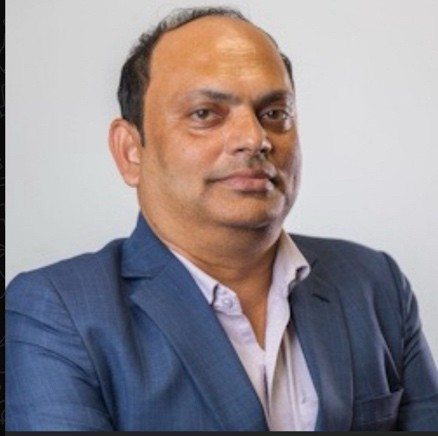
Portrait of Sandip Rakshit

Keynote Speaker

Sandip Rakshit

Professor at Rabat Business School, International University of Rabat. Expert in Business & Technology strategy, digital transformation, and AI-driven innovation. 20+ years leading tech ventures across Europe and Africa.


ikram

Keynote Speaker

Ikram Benabdelouahab

FSTT, Abdelmalek Essaâdi University, Morocco.

Industrial Speakers

Portrait of Mohamed EDDOUJAJI

Mohamed EDDOUJAJI

TMSA, Tanger

Portrait of Hamza ESSAD

Hamza ESSAD

NearSecure, Rabat

Portrait of Youssef CHEIKHI

Youssef CHEIKHI

NearSecure, Rabat

General Chair

Dr. Jamal ElABDELKHALKI

EST, Tetouan

Coordinates the conference program, speakers, and the scientific direction of the event.

Conference Information

Venue

EST Tetouan, Abdelmalek Essaâdi University

Conference Chairs

Leadership team overseeing the conference program and organization.

Chair

ziz MAHBOUB

FST Tangier

Co-Chair

Anouar Abdelhakim BOUDHIR

FST Tangier

Program Chair

Mohamed BEN AHMED

FST Tangier

Logistics Chair

Mohamed Ait Lahcen

EST Tetouan

Sponsorship Chair

Yassine Rahmani

University Partner

Organizing Committee

Senior faculty overseeing conference organization.

Pr. Aboubakr EL HAMMOUMI

Pr. Mohammed MAHFOUDI

Pr. Imane JOTI

Junior Organizing Committee

Student team supporting conference logistics and operations.

Omar Tazi

Nadia El Ouazzani

Hamza Boukhris

Sara Mouline

Technical Program Committee

Expert reviewers evaluating paper submissions.

Pr. Faouzi MARZOUKI

Pr. Seddik Soukaina

Pr. Soufiane MEZROUI

Pr. Mohammed BOUTALLINE

Conference Topics

Cybersecurity and Artificial Intelligence are the principal themes, supported by software, data, smart-energy, information-systems and sustainable-engineering tracks.

Primary track

Cybersecurity & Digital Trust

  • AI for Intrusion Detection
  • Cybersecurity for Sustainable Development
  • Secure Smart Cities & Infrastructure
  • Data Privacy & Protection
  • Cybersecurity in IoT & Smart Systems
  • Blockchain Security for Sustainability
  • Red Teaming & Ethical Hacking
  • Post-Quantum Cryptography

Primary track

AI for Sustainability

  • Machine Learning & Deep Learning
  • Swarm Intelligence
  • Natural Language Processing
  • Computer Vision
  • Fuzzy Systems
  • Climate Modeling with AI
  • AI-Driven Resource Optimization
  • AI Risk Management

Software Development, Data & Intelligent Systems

  • Secure Software Engineering
  • AI-Assisted Software Development
  • Cloud & Distributed Systems
  • DevSecOps & Software Supply Chain Security
  • Data Engineering & Analytics
  • Business Intelligence & Analytics
  • Decision Support Systems
  • Intelligent Digital Platforms

Smart Grid Technologies

  • Smart Grid Dispatch
  • Energy Efficiency
  • Microgrid Control
  • Energy Storage
  • Renewable Integration
  • Grid Cybersecurity

Information Systems & Organizations

  • Information Systems Management
  • Digital Transformation of Organizations
  • ERP & Sustainable Operations
  • Governance of Information Systems
  • Digital Innovation for Sustainable Development

Sustainable Civil Engineering

  • Environmental Engineering
  • Low-Carbon Construction
  • Geotechnical Engineering
  • Recycled Materials
  • Smart Infrastructure
  • Circular Economy in Construction